


Pain Management & Follow-Up After Pancreatic Surgery: An Essential Guide

The pancreas is not just one organ — it is two systems in one. It produces digestive enzymes that break down your food, and it makes insulin to control your blood sugar. When surgery involves the pancreas, both of these functions can be disrupted simultaneously. That is why recovery after pancreatic surgery is more complex, more closely monitored, and more nutritionally demanding than recovery from most other abdominal operations.
The good news: with the right pain management, diet, and follow-up, the vast majority of patients recover well and return to a good quality of life.
For patients recovering from pancreatic surgery Singapore, this guide covers key aspects of post-surgical care, including pain management, diet and hydration, follow-up schedules, and symptoms that should never be ignored. Understanding your body’s needs can help you heal with fewer complications and greater confidence.
Different Types of Pancreatic Surgery
Recovery depends on the type of surgery performed. Common procedures include:
Understanding your specific procedure helps set realistic recovery expectations:
Whipple Procedure (Pancreaticoduodenectomy): The most complex — removes the head of the pancreas, the first part of the small intestine (duodenum), the gallbladder, and sometimes part of the stomach. The remaining organs are reconnected in a carefully reconstructed digestive pathway. Sometimes the blood vessels around are also resected and reconstructed increasing procedure complexity. Hospital stay is typically 7–10 days; full recovery 6–12 weeks.
Distal Pancreatectomy: Removes the body and tail of the pancreas, usually for tumours or cysts in that region. Often performed alongside removal of the spleen. Recovery is generally faster than a Whipple.
Total Pancreatectomy: Complete removal of the pancreas. Patients will require both insulin (as they become diabetic) and lifelong pancreatic enzyme replacement — but can live well with proper management.
Endoscopic & Minimally Invasive Procedures: For ductal stones, small cysts, or selected tumours, procedures performed through a `key -hole ` surgery using a camera — either laparoscopically or robotically — cause significantly less trauma to surrounding tissue. Patients typically experience less post-operative pain, shorter hospital stays (often 3–5 days versus 7–10), faster return to normal diet, and lower wound complication rates compared to open surgery. The outcomes for cancer clearance are equivalent in appropriately selected patients at experienced centres.
Knowing your procedure guide helps with your approach to pain control, diet, and follow-up care.
Understanding Post-Surgery Pain: What’s Normal?
Pain is expected — but it should follow a predictable arc: most intense in the first 48–72 hours, then gradually easing over 2–3 weeks. Sharp, constant, or worsening pain after the first week warrants medical attention.
Early Pain
Right after surgery, pain control is a priority. Doctors use medications, including stronger pain relievers or milder options, to keep you comfortable.
Gradual Improvement
As your body heals, pain should slowly decrease. It often changes from sharp pain to mild soreness or tenderness that is easier to manage.
Pain Relief Options
Your healthcare team will create a plan that may include:
Pain medications taken by mouth or through an IV
Nerve blocks to reduce pain near the surgical area
Gentle physical therapy to improve movement and reduce stiffness
Pain Management Strategies That Work
Effective pain control supports breathing, movement, sleep, and faster healing. Most patients benefit from a combination of medications and simple non-drug techniques.
Medications for Pain Control
Opioids
Used short-term for severe pain, especially after major surgeries like a Whipple.
Risks include constipation, drowsiness, nausea, and dependence.
Doctors gradually reduce (taper) use as healing progresses.
Non-Opioid Medications
● It includes paracetamol, NSAIDs (if appropriate), and nerve pain medications.
● Taken regularly, they help maintain steady relief and reduce the need for opioids.
● Always consult your healthcare team before using over-the-counter medicines.
Non-Drug Pain Relief
Pillow splinting: Hold a pillow firmly against your abdomen when coughing, sneezing, or getting up. This reduces incision strain immediately.
Deep breathing exercises: Do these hourly in the first few days. Shallow breathing after abdominal surgery leads to lung collapse (atelectasis) — a preventable complication.
Early walking: From day one post-surgery. Reduces blood clot risk, improves gut function, and shortens hospital stay. Even a slow walk down the corridor counts.
Positioning: Sleeping slightly elevated and avoiding twisting movements protects the incision and reduces pain.
When Pain is a red flag
Seek urgent review if you experience:
Pain that is worsening rather than improving after day 3–4
Fever above 38°C with abdominal pain
Pain with vomiting you cannot control
A sudden new, severe pain anywhere in the abdomen
Diet and Hydration After Pancreatic Surgery
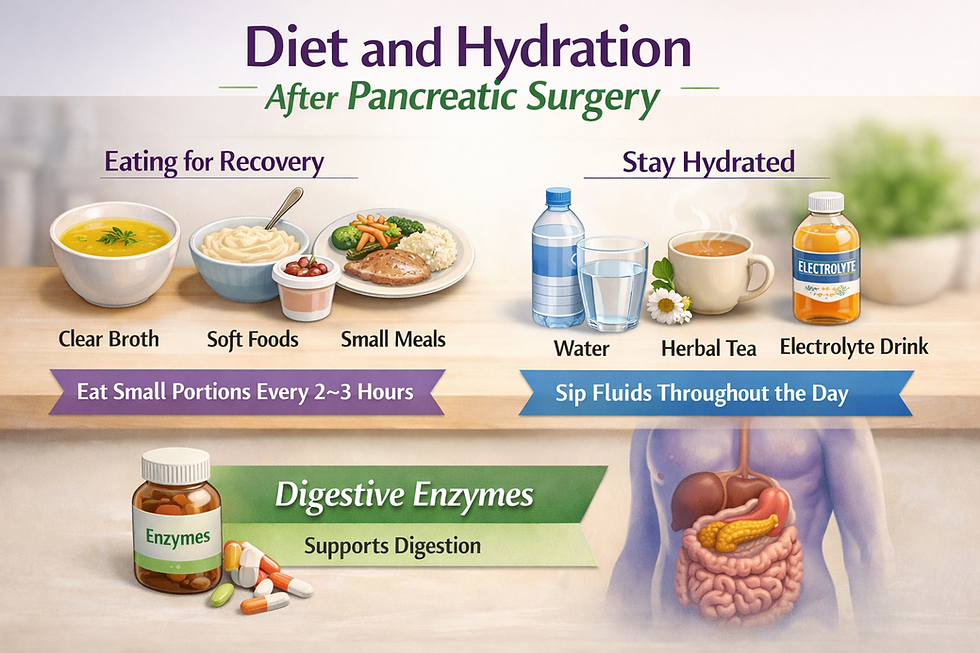
Eating habits often change after surgery. Because the pancreas supports digestion, appetite and food tolerance may vary. Following proper nutrition is an important part of pancreatic surgery home care and supports healing.
Eating for Recovery
Start with clear liquids and soft foods like porridge or yogurt. Eat small meals every 2–3 hours, and chew slowly. Early fullness, bloating, or reduced appetite is normal and usually improves.
Digestive Enzymes or Pancreatic Enzyme Replacement Therapy (PERT)
If part of your pancreas was removed, you may not produce enough enzymes for proper digestion. These supplements help:
Improve digestion
Reduce bloating and gas
Prevent oily stools
Maintain weight
Watch for these nutritional deficiencies
Vitamin D, calcium, vitamin B12, and fat-soluble vitamins (A, E, K) are poorly absorbed after pancreatic surgery. Regular blood tests every 3–6 months catch deficiencies before they cause symptoms like fatigue, bone pain, or nerve damage.
Staying Hydrated
Fluids help maintain energy, digestion, and prevent constipation. Sip water, soups, or rehydration drinks throughout the day. Limit caffeine early in recovery. If eating or drinking is difficult, talk to your healthcare team or a dietitian to make sure you get enough nutrition.
Common Complications to Watch For
Here are the most common ones:
Infection
Infections can occur around the incision or inside the abdomen after pancreatic surgery. Watch for signs such as fever, chills, redness, swelling, warmth, increasing pain, or unusual discharge from the wound.
Post-operative pancreatic fistula (POPF): The most feared complication unique to pancreatic surgery. Where the pancreas was cut or joined, digestive enzymes can leak — causing chemical injury to surrounding tissue, abscess, or bleeding. Presents as persistent abdominal drain output, fever, or rising inflammatory markers. Graded A–C in severity; Grade C fistulae may require re-intervention.
Delayed gastric emptying (DGE): The stomach takes longer than normal to empty after a Whipple. Causes persistent nausea, inability to eat, and prolonged hospital stay. Usually resolves with time and dietary modification; occasionally requires a nasogastric tube temporarily.
Nutritional Deficiencies
You may be at risk for deficiencies in vitamins and minerals such as vitamin D, calcium, and B12. These can lead to fatigue, bone issues, and weakened immunity. A balanced diet and supplements, along with regular blood tests, help prevent deficiencies.
Diabetes Management
Surgery may affect insulin production and blood sugar levels. Individuals who already have diabetes may need to have their blood sugar checked and their medications adjusted.
Follow-Up Care Schedule You Must Not Skip

Recovery doesn’t end when you leave the hospital. Regular follow-up visits allow your medical team to monitor healing, adjust medications, and detect complications early. Staying consistent with these appointments helps prevent small problems from becoming serious.
Follow-Ups :
Week 1–2 (post-discharge): Wound check, drain removal if applicable, blood tests, medication review.
Month 1–3: CT scan to assess surgical site and screen for tumour recurrence (if cancer was the indication). Blood sugar monitoring. Nutritional review. Enzyme dose adjustment.
Month 3–12: Tumour markers (CA 19-9 if pancreatic cancer), repeat imaging per oncology protocol, dietitian review, diabetes management review.
Long-term (annually): Bone density scan if on long-term enzyme replacement, vitamin levels, psychological wellbeing assessment. Pancreatic cancer survivors have a meaningfully elevated risk of recurrence in the first 2 years — surveillance is not a formality.
When to Seek Immediate Help
Seek urgent care if you notice:
Severe or sudden pain not relieved by medication
Fever or chills
Persistent vomiting or nausea
Difficulty breathing or chest pain
Rapid or unusual changes in your condition
Even mild new symptoms should not be ignored. Early reporting helps prevent serious complications and supports faster recovery.
Before You Undergo Pancreatic Surgery: 6 Questions to Ask Your Surgeon
These are not just polite questions — they are your right as a patient, and the answers meaningfully affect your outcome:
1. What is the indication — why exactly do I need this operation? The urgency, extent of surgery, and long-term implications differ enormously between these indications.
2. What are my alternatives? For many pancreatic conditions —stones, cysts (IPMNs), early chronic pancreatitis, or small neuroendocrine tumours —endoscopic intervention, surveillance, or medical management may be equally appropriate. Understand what happens if you wait, and what the window for intervention looks like.
3. What are the risks — specific to me? Individual risk depends on your age, fitness, nutritional status, and underlying disease. Ask for your personal risk estimate, not just the population average.
4. What are the realistic outcomes? If this is for cancer — what is the expected survival benefit? If for chronic pancreatitis — what proportion of patients achieve meaningful pain relief, and for how long?
5. Open vs minimally invasive — what is the evidence, and which approach do you recommend for me? Laparoscopic and robotic pancreatic surgery have been shown in randomised trials (including the LEOPARD-2 trial for distal pancreatectomy) to reduce blood loss, shorten hospital stay, and improve recovery time, with equivalent oncological outcomes in selected patients. However, the data for minimally invasive Whipple procedures , is not strong and require significant surgical expertise.
6. What is your personal experience and what are this centre's outcomes? Experience matters in pancreatic surgery, and it is perfectly reasonable to ask your surgeon the experience and individual / centre outcomes. A good surgeon will always welcome that conversation
A Note from ALPS Clinic
If your symptoms are severe or worsen quickly, go to the nearest emergency department. Even mild changes should not be ignored. If you notice anything unusual or concerning, contact a pancreas specialist Singapore at ALPS Clinic immediately. Early reporting helps prevent serious complications and supports a faster, safer recovery.



Comments